What is a Wheel Fitment?
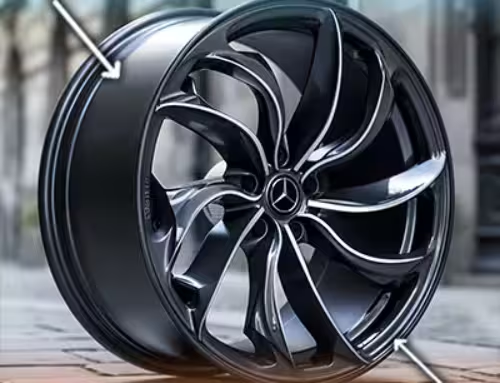
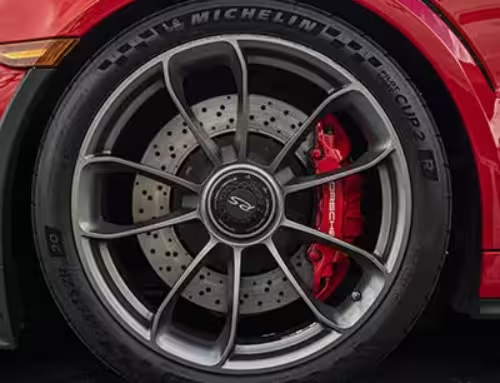
When upgrading or customizing your vehicle’s wheels, one term you’ll encounter often is “wheel fitment.” But what exactly does it mean, and why is it so important? In simple terms, wheel fitment refers to how well a wheel fits within the wheel well or underneath the fenders of your vehicle. Proper wheel fitment ensures that your wheels not only look great but also function effectively, maintaining optimal handling, safety, and performance.
Understanding Wheel Fitment
To achieve the perfect fitment, several factors must be considered. These include bolt pattern, wheel diameter and width, and offset. Let’s break down each of these elements:
Understanding Your Vehicle’s Bolt Pattern
The bolt pattern of a wheel describes the number of lugs and the diameter between them. It’s expressed as a combination like 5×114.3 mm or 6×139.7 mm. The first number indicates how many bolts or lug holes the wheel has, while the second number measures the diameter across those bolts. Ensuring your wheel’s bolt pattern matches your vehicle is crucial for proper fitment.
Choosing the Right Wheel Size
Wheel dimensions are commonly expressed in terms of diameter (e.g., 18 inches, 20 inches) and width (e.g., 9 inches, 10 inches). These measurements determine how the wheel fits within the wheel well and interacts with your vehicle’s suspension. Larger wheels are popular for their aesthetic appeal, but it’s essential to maintain the correct size range for your specific vehicle to avoid issues with handling or clearance.
How Wheel Position Affects Your Vehicle
Offset is another critical factor in wheel fitment. It refers to how the wheel sits in relation to the vehicle’s suspension and body components. Offset is measured as the distance between the wheel’s hub mounting surface and its centerline. There are three main types of offset:
- Positive Offset: The hub mounting surface is closer to the wheel’s front, making the wheel sit further inside the wheel well. This is common in modern vehicles.
- Negative Offset: The hub mounting surface is closer to the back, pushing the wheel outward, giving it a more aggressive stance.
- Zero Offset: The hub mounting surface aligns perfectly with the wheel’s centerline. Want to learn more about wheel offset? Check out our full guide What is Wheel Offset? on for detailed insights!
Why Does Wheel Fitment Matter?
Proper wheel fitment is essential for both aesthetics and performance. A well-fitted wheel ensures that your vehicle handles smoothly, without any rubbing or clearance issues. Incorrect fitment can lead to a variety of problems:
- Rubbing: If your wheels have the wrong offset or are too wide, they may rub against the suspension components, brake calipers, or fenders, leading to damage over time.
- Handling Issues: Improper fitment can negatively impact steering response and vehicle stability, especially at higher speeds or during sharp turns.
- Suspension Wear: An incorrect offset can place extra stress on suspension components, leading to premature wear and tear.
How to Ensure Proper Wheel Fitment
When selecting aftermarket wheels, it’s crucial to consider all the factors mentioned above. Many online resources and tools, such as wheel fitment calculators, can help determine whether a particular wheel will fit your vehicle. Additionally, consulting with professionals who specialize in wheel and tire fitment is always a good idea.
Wheel fitment involves making sure that your wheels not only fit within your vehicle’s wheel wells but also function effectively without causing any issues. By considering the bolt pattern, wheel size, and offset, you can achieve the ideal fitment that enhances both the look and performance of your ride.
Looking to upgrade your wheels? Trust the experts at Wheels Doctor for flawless fitment and premium service. Call Wheels Doctor Miami today at (305) 490-2028 | (305) 964-7909
If you’re planning a wheel upgrade, explore our guide on What Is Wheel Offset? to better understand one of the most important measurements involved in fitment.
You can also learn more about our Wheels Doctor Services Miami, including wheel customization, repairs, refinishing, and restoration.
Want to see custom wheel builds, repair projects, fitment ideas, and before-and-after transformations? Follow Wheels Doctor on social media:
📲 Instagram: @wheelsdoctor
📲 Facebook: @wheelsdoctor
Frequently Asked Questions
✅ How Do I Know Which Wheels Fit My Car?
➡️ Check your vehicle’s bolt pattern, wheel diameter, width, offset, and center bore. These specifications must be compatible with your vehicle for proper fitment.
✅ Does Wheel Offset Affect Handling?
➡️ Yes. Offset determines how far the wheel sits inward or outward from the vehicle. The wrong offset can cause rubbing, clearance problems, or handling issues.
✅ Can I put bigger wheels on my car?
➡️ Often, yes, but larger wheels must remain compatible with your vehicle’s suspension, brakes, tires, and fenders. Professional fitment advice can help prevent clearance issues.
✅ What Happens When Wheels Don’t Fit Properly?
➡️ Incorrect fitment can cause tire or suspension rubbing, poor handling, uneven tire wear, and additional stress on suspension components.
✅ Do aftermarket wheels fit any car?
➡️ No. Aftermarket wheels are not universally compatible. The bolt pattern, offset, width, diameter, and center bore must match your vehicle’s specifications.
✅ Can a professional help me choose the right wheel fitment?
➡️ Yes. A wheel specialist can check your vehicle’s specifications and recommend wheel and tire combinations that provide proper clearance, appearance, and performance.