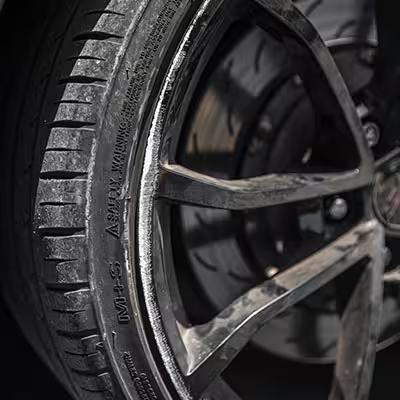
Can You Just Paint Over Curb Rash?
Curb Rash is one of the most common types of wheel damage drivers experience. A simple mistake while parking or making a tight turn can leave your rims with scratches, scuffs, and visible marks that affect the appearance of your vehicle.
Many car owners wonder: Can you just paint over curb rash and make the wheel look new again? The answer depends on how severe the damage is. While painting can improve minor cosmetic issues, deeper damage may require professional wheel repair to achieve a safe and long-lasting result.
In this guide, we explain when painting over curb rash works, when it does not, and the best solutions to restore damaged wheels.
What Happens When Curb Rash Damages Your Wheels?
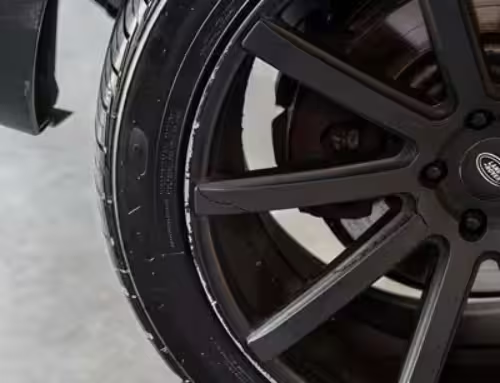
When curb rash occurs, the outer edge of the rim can become scratched, gouged, or scraped after contacting concrete surfaces. This type of wheel damage is extremely common, especially on modern vehicles equipped with low-profile tires.
While many cases are purely cosmetic, harder impacts may also bend or crack the wheel, creating problems that go beyond appearance.
Common signs of wheel damage include:
- Light surface scratches
- Paint chips
- Scraped alloy edges
- Deep gouges
- Bent rim lips
- Small cracks after a severe impact
If you’re unsure whether the damage is only cosmetic, it’s best to have the wheel professionally inspected before attempting any DIY repair.
Common Causes of Curb Rash on Wheels
Even experienced drivers occasionally scrape a curb. Some of the most common causes include:
Tight Parking Spaces
Parallel parking or squeezing into narrow parking spots often leaves very little room between the tire and the curb.
Sharp Turns
Turning too closely around curbs can easily cause the wheel to make contact with concrete edges.
Low-Profile Tires
Vehicles with low-profile tires expose more of the wheel, providing less rubber protection against accidental impacts.
Limited Visibility
Poor lighting, unfamiliar streets, or relying only on mirrors can increase the likelihood of scraping a wheel while parking.
Can You Paint Over Curb Rash Damage?
The answer depends entirely on how severe the damage is.
If the scratches are shallow and only affect the paint, refinishing the surface can significantly improve the wheel’s appearance.
For minor curb rash, repainting the affected area can improve the wheel’s appearance. However, paint will not fix structural problems caused by severe impacts.
However, if the impact removed metal, created deep gouges, or bent the rim, simply covering it with paint will only hide the damage temporarily.
Before deciding on any repair, inspect the wheel carefully for:
- Cracks
- Bent edges
- Missing aluminum
- Air leaks
- Tire vibration while driving
These issues require professional attention and should never be ignored.
Benefits of Painting Minor Curb Rash Damage
When the damage is only cosmetic, repainting offers several advantages.
Affordable Solution
Compared to replacing a wheel, painting is considerably less expensive.
Faster Repair
Most cosmetic repairs can be completed in just a few hours.
Ideal for DIY Projects
With proper preparation and quality materials, many vehicle owners can restore minor scratches at home.
Improved Appearance
Fresh paint helps restore the factory finish and makes the wheel look significantly cleaner.
Limitations of Painting Over Curb Rash
Painting isn’t a permanent fix for every situation.
Some important limitations include:
- It doesn’t repair structural damage.
- Poor surface preparation leads to peeling paint.
- Deep scratches often remain visible.
- Color matching can be difficult.
- DIY finishes rarely match a professional refinishing job.
For luxury vehicles or custom-painted wheels, professional refinishing generally delivers much better long-term results.
How to Tell If the Wheel Needs More Than Paint
Before buying primer and spray paint, inspect the wheel carefully.
You should consider professional repair if you notice:
- Cracks anywhere on the wheel
- Bent lips
- Significant chunks of missing metal
- Tire losing pressure
- Steering wheel vibration
- Uneven tire wear
These symptoms often indicate damage beyond the surface finish and should be repaired by experienced technicians.
How to Repair Minor Curb Rash on Your Wheels
If your wheel only has light cosmetic damage, repainting it can restore much of its original appearance. The key is taking the time to prepare the surface properly. Skipping any of the following steps can lead to peeling paint, uneven color, or a finish that doesn’t last.
1. Wash the Wheel Thoroughly
Start by removing all dirt, brake dust, grease, and road contaminants.
Use a dedicated wheel cleaner and a soft brush to clean every corner of the rim. Any residue left behind can prevent primer and paint from bonding correctly.
Allow the wheel to dry completely before moving to the next step.
2. Sand the Damaged Area
Use fine-grit sandpaper (typically between 320 and 600 grit) to smooth the scratched surface.
The goal isn’t to remove large amounts of material but to feather the edges of the damaged paint so the repair blends into the surrounding finish.
For deeper imperfections, continue sanding until the surface feels smooth to the touch.
3. Fill Deep Gouges
If the scrape removed aluminum or left noticeable grooves, apply a metal filler designed specifically for alloy wheels.
Once the filler has cured, sand it until it sits perfectly flush with the surrounding surface.
This step makes the biggest difference in achieving a factory-like finish.
4. Protect the Tire
Use masking tape and plastic sheeting or paper to cover:
- The tire
- Valve stem
- Brake components
- Areas of the wheel that won’t be painted
Taking a few extra minutes here prevents overspray and reduces cleanup later.
5. Apply Primer
Choose a high-quality self-etching or automotive primer formulated for aluminum wheels.
Apply several light coats instead of one heavy coat.
Allow each layer to dry according to the manufacturer’s instructions before adding the next.
Primer improves adhesion and helps produce a smoother final finish.
6. Paint the Wheel
Select automotive wheel paint that matches your wheel’s original color.
Rather than spraying one thick coat, apply several thin, even coats.
This helps prevent:
- Runs
- Drips
- Uneven texture
- Visible paint buildup
Patience during this stage produces much better results.
7. Finish with a Clear Coat
A clear protective coating seals the paint and provides resistance against:
- UV exposure
- Brake dust
- Moisture
- Road debris
It also restores the gloss that most factory wheels have.
Allow the wheel to cure fully before driving or washing the vehicle.
Common Curb Rash Repair Mistakes to Avoid
Many home repairs fail because of simple mistakes rather than poor materials.
Avoid these common errors:
Skipping Surface Preparation
Painting directly over scratches almost always leads to poor adhesion.
Using Household Spray Paint
Automotive wheels require products designed to withstand heat, road debris, and harsh weather conditions.
Generic spray paint usually fades or chips much faster.
Applying Thick Coats
Heavy coats dry unevenly and often create drips or visible texture.
Thin coats always produce better-looking results.
Ignoring Structural Damage
Paint cannot repair a bent wheel or fix cracks in the aluminum.
If the wheel has suffered a hard impact, cosmetic work should never replace a proper inspection.
DIY Curb Rash Repair: When It Works and When It Doesn’t
A do-it-yourself repair can be a practical option when:
- The scratches are shallow.
- There are no cracks.
- The wheel is perfectly round.
- The tire still holds air normally.
- You’re comfortable using automotive paint products.
DIY repairs can work well for small areas of curb rash when the damage only affects the surface finish. However, deeper damage should always be evaluated before applying paint.
For many daily drivers, repainting minor cosmetic damage can significantly improve the appearance of the wheels without a major investment.
Professional Curb Rash Repair and Wheel Refinishing
Some damage requires specialized equipment and experienced technicians.
Professional wheel repair is recommended if you notice:
- Deep gouges
- Bent rim edges
- Cracks
- Severe curb impacts
- Multiple damaged areas
- Diamond-cut finishes
- Machined wheel surfaces
- Custom powder-coated wheels
Professionals use precision equipment to reshape, weld (when appropriate), refinish, and color-match the wheel so it closely resembles its original factory appearance.
For luxury vehicles such as BMW, Mercedes-Benz, Porsche, Audi, Tesla, or Range Rover, professional refinishing is often the safest and most cost-effective solution.
Why Professional Repairs Last Longer
A professional repair involves much more than applying fresh paint.
Depending on the condition of the wheel, the process may include:
- Complete stripping of the old finish
- Precision sanding
- Alloy repair
- CNC machining (when applicable)
- Powder coating or OEM paint
- High-quality clear coat application
- Careful color matching
- Final balancing and quality inspection
The result is typically far more durable than a standard DIY repair and better suited to withstand daily driving conditions.
Alternative Repair Options
Painting isn’t the only way to improve the appearance of a damaged wheel. Depending on the severity of the damage, these options may be a better investment.
Professional Wheel Refinishing
If the wheel has deep scratches, gouges, or finish damage, professional refinishing can restore its original appearance with a longer-lasting result than most DIY repairs.
Wheel Replacement
Replacement is only recommended when the wheel has severe cracks, major bends, or structural damage that cannot be repaired safely.
Protective Measures
To reduce the risk of future damage:
- Park slowly and use your mirrors or parking camera.
- Leave extra space when parking near curbs.
- Be cautious when making tight turns.
- Clean your wheels regularly to spot damage early.
Restore Your Wheels with Wheels Doctor
While painting may improve the appearance of minor scratches, it’s not always the best long-term solution. If your wheel has deeper damage or you’re looking for a factory-quality finish, professional refinishing is the safest option.
At Wheels Doctor, we specialize in wheel repair, wheel refinishing, custom wheel painting, powder coating, and curb damage restoration for drivers throughout Miami and South Florida.
Want to learn more? Explore our Wheel Refinishing Service service to see how we restore scratched, faded, and damaged wheels to like-new condition.
📞 Call us today for a free estimate:
Frequently Asked Questions
✅ Can I paint over minor curb rash?
➡️ Yes, you can paint over minor curb rash if the wheel only has surface scratches and no structural damage. Proper cleaning, sanding, and preparation are necessary for a quality result.
✅ How long does a painted wheel repair last?
➡️ A DIY repair can last for years if completed correctly, but professional refinishing typically offers greater durability and a more factory-like finish.
✅ Can wheel damage affect safety?
➡️ Minor surface scratches are usually cosmetic. However, cracks, bends, or air leaks should always be inspected by a professional.
✅ Is repairing a wheel cheaper than replacing it?
➡️ In most cases, yes. Cosmetic and moderate damage can often be repaired at a lower cost than buying a new wheel.
✅ How can I prevent wheel damage?
➡️ Drive carefully around curbs, park slowly, and use parking cameras or mirrors whenever possible to avoid contact with the curb.
Stay Connected with Wheels Doctor
Want to see more wheel transformations, repair results, and expert tips? Follow Wheels Doctor on Instagram (@wheelsdoctor) and Facebook (@wheelsdoctor) for behind-the-scenes projects, custom wheel inspiration, and helpful advice to keep your wheels in top condition.